
Turf TitanZ’s Total Insect Control for Fall 2026
Some lawn insects feed on grass blades where damage becomes visible quickly. Others stay below the soil and attack the roots. A single application cannot address every pest at every stage of its life cycle, so Turf TitanZ’s TIC Program combines broad-spectrum treatments with dedicated grub and fire ant applications at different points in the growing season.
Turf TitanZ provides a four-treatment Total Insect Control (TIC) Program. Our strategically timed applications target white grubs, armyworms, fire ants, fleas, ticks, chinch bugs, sod webworms, mole crickets, and other insects that can damage turf or make outdoor areas less comfortable to use.
Table of Contents
What Does the Turf TitanZ TIC Program Include?
Our TIC Program includes four applications, with each round focused on the insects most likely to require attention at that stage of the season.
| TIC Program Round | Primary Focus | Pests Targeted | Timing & Purpose |
|---|---|---|---|
| Round 1 | Broad-Spectrum Lawn Insect Control | Spittlebug larvae, crane fly larvae, armyworms, sod webworms, cutworms, ants, fleas, and ticks | Early-season control for surface-feeding and nuisance pests |
| Round 2 | Preventive White Grub Treatment | White grubs, mole crickets, fleas, ticks, chinch bugs, June bugs, and Japanese beetles | Helps address grub pressure before substantial root damage develops |
| Round 3 | Fire Ant Prevention & Control | Fire ants, fleas, ticks, centipedes, millipedes, and earwigs | Targets fire ant colonies and other nuisance pests throughout treated turf |
| Round 4 | Late-Season Broad-Spectrum Control | Armyworms and other active surface-feeding lawn insects | Late July through September, when summer and early-fall pest activity may remain high |
Why Are Four Insect Treatments Needed?
Lawn insects don’t all emerge, reproduce, or feed at the same point in the growing season. White grubs may be developing below the soil while caterpillar pests are feeding above it, and fire ant colonies create a different type of problem altogether.
Using four strategically timed treatments allows the Turf TitanZ TIC Program to address changing pest pressure throughout the season.
Our program includes:
- Two broad-spectrum treatments for pests such as armyworms, sod webworms, cutworms, ants, fleas, ticks, and other active lawn insects
- One preventive grub treatment timed to reduce the risk of root damage before a serious infestation develops
- One fire ant treatment focused on preventing and controlling colonies while also targeting several nuisance pests
- Season-long coverage that addresses pests with different life cycles, feeding habits, and periods of activity
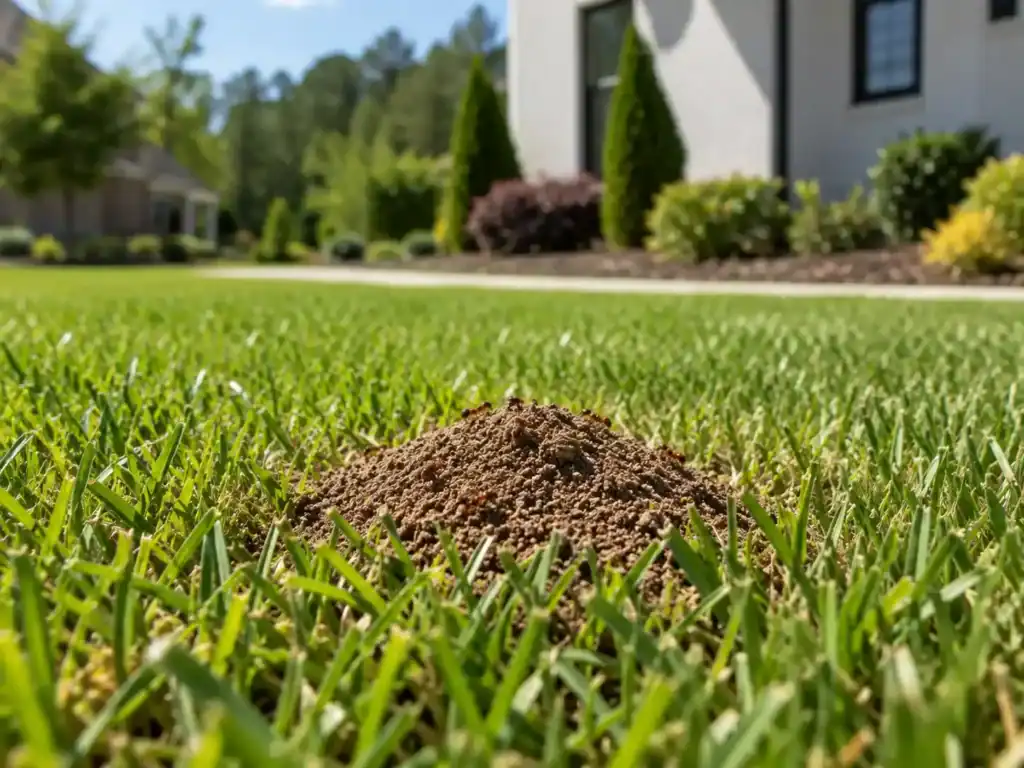
This approach is useful for properties that have dealt with recurring grubs, armyworms, fire ants, fleas, or ticks, as well as homeowners who want to address predictable pest pressure before extensive turf damage appears.
How Can I Tell If Insects Are Damaging My Lawn?
Not every insect infestation is easy to spot early. Root-feeding pests are hidden below the surface, while some other lawn insects are more active during specific times of day.
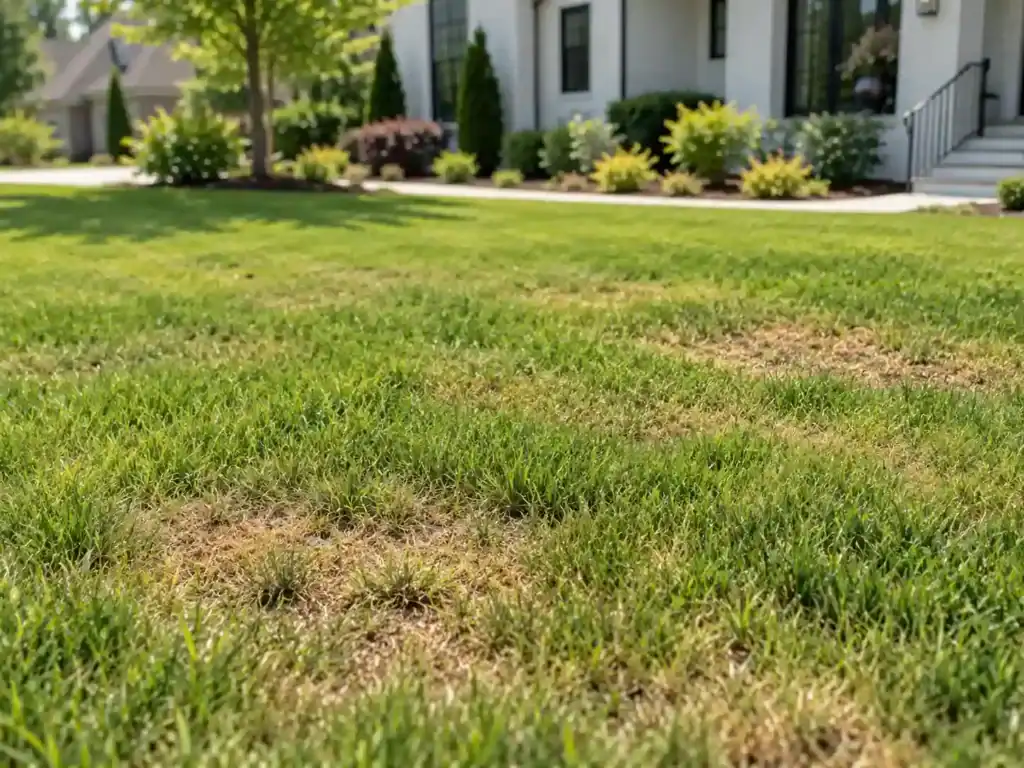
Signs worth investigating include:
- Irregular brown or thinning patches
- Grass that feels loose or pulls away from the soil
- Chewed or closely cropped grass blades
- Rapidly expanding areas of turf damage
- Increased bird or animal activity in one section of the lawn
- Fire ant mounds
- Turf that continues declining despite adequate watering
The symptom alone does not identify the cause. Drought, irrigation problems, fungal disease, nutrient deficiencies, mowing damage, and insects can produce similar-looking areas of brown or thinning turf.
That is why we don’t recommend treating every brown patch as an insect problem. Identifying what is actually happening in the lawn comes first, then our team can develop a targeted insect control program designed specifically for your turf.
How to Fit Insect Control Into Your Regular Lawn Care Practices
Insect control addresses pests that can damage grass above or below the soil, but healthy turf also depends on proper nutrition, soil conditions, mowing, watering, and seasonal maintenance. Turf TitanZ can incorporate the four-round TIC Program into a broader lawn care plan so insect protection works alongside the services your grass needs throughout the year.
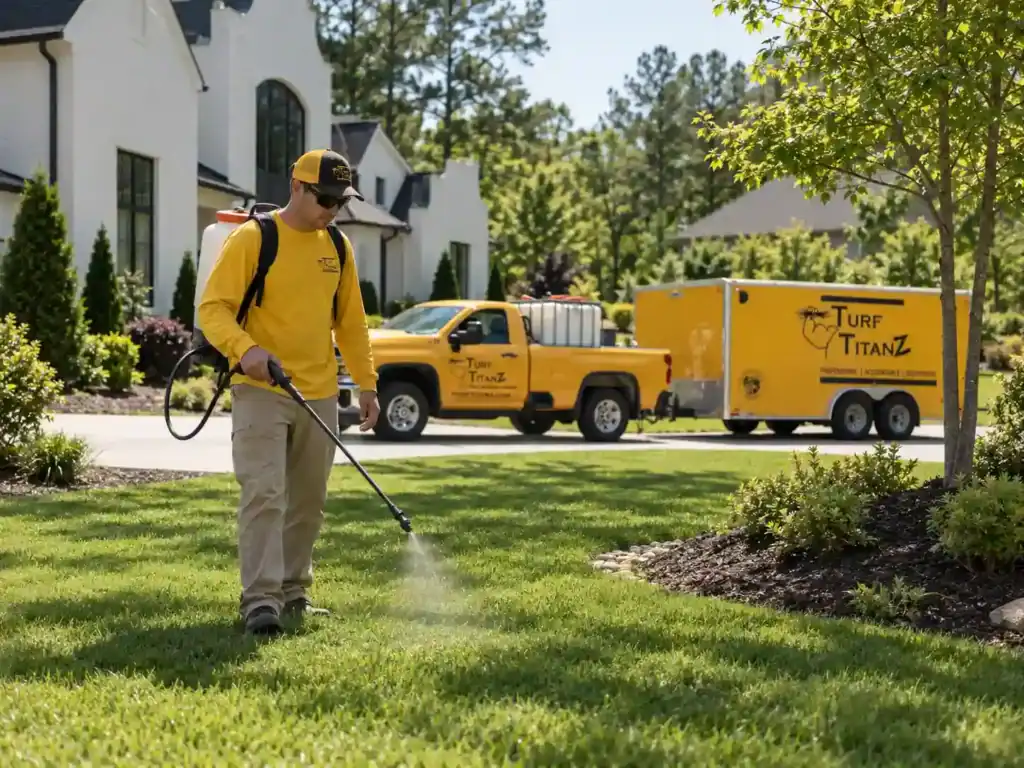
Combine Insect Control With Lawn Fertilization and Weed Management
A lawn weakened by nutrient deficiencies, weed competition, heat, or drought may have a harder time recovering after insects feed on the roots or grass blades. Turf TitanZ’s lawn fertilization services support healthy turf growth while targeted weed treatments reduce competition for water, nutrients, and growing space.
Pairing these services with TIC addresses different problems at the same time. Fertilization supports the grass itself, weed control limits unwanted plants, and insect treatments target pests such as grubs, armyworms, chinch bugs, and fire ants.
Use Lawn Aeration to Support Stronger Turf
Compacted soil can restrict the movement of air, water, and nutrients into the root zone. Turf TitanZ’s lawn aeration services relieve compaction and create better growing conditions for established turf.
Aeration can be useful as part of a lawn recovery plan when grass has thinned from summer stress, heavy use, or previous insect damage. Controlling the pest stops continued feeding, while aeration and appropriate turf care give the lawn better conditions for new growth.
Keep Up With Mowing and Irrigation
Proper lawn mowing and watering still affect how well a lawn handles insect pressure. Cutting grass too short can add stress during hot weather, while too little water can leave turf poorly equipped to recover from feeding damage. Excess water can create a different set of turf problems.
Turf TitanZ can evaluate the condition of your lawn as part of our broader lawn care services and help identify when declining grass appears to involve insects versus irrigation, mowing, disease, or another source of stress.
Turf TitanZ TIC Program FAQs
Does Turf TitanZ’s TIC Program eliminate every insect from my lawn?
Our TIC Program does not eliminate every insect from a property. Outdoor insects can move in from neighboring areas, wildlife can introduce fleas or ticks, and pest populations change with weather and other conditions. Our dedicated insect control program is intended to prevent or reduce the targeted pests and lower the risk of significant turf damage or nuisance activity.
Does Turf TitanZ’s TIC Program include preventive grub control?
Yes, our TIC Program does include preventive white grub control. The second of the four treatments targets grubs before extensive root feeding becomes visible while also addressing mole crickets, fleas, ticks, chinch bugs, June bugs, Japanese beetles, and other lawn insects.
Does the Total Insect Control Program treat fire ants?
Yes, Turf TitanZ’s TIC Program does treat fire ants. One round is dedicated to fire ant prevention and control throughout treated turf while also targeting fleas, ticks, centipedes, millipedes, and earwigs.
Does lawn insect control help with fleas and ticks?
Turf TitanZ’s lawn insect control program targets fleas and ticks during multiple TIC rounds. Results can vary based on wildlife activity, neighboring untreated areas, environmental conditions, and the amount of existing pest pressure on the property.
What should I do to my lawn after insect treatment?
Follow any instructions provided for the specific application, including how long people and pets should remain off treated turf. The U.S. Environmental Protection Agency advises keeping children and pets away from pesticide-treated areas until the product has dried or for the period directed on its label.
You can review the EPA’s current pesticide safety recommendations for additional information.
Can insect treatments repair grass that is already damaged?
No, insect treatments do not repair turf that has already been damaged. They address the pest causing or threatening the damage. Recovery depends on how much turf was affected, the grass type, root condition, weather, irrigation, and the lawn’s overall health.
Protect Your Lawn With Turf TitanZ’s Total Insect Control Program
Seasonal insect pressure can damage turf before the problem is obvious. Turf TitanZ’s TIC Program targets grubs, armyworms, fire ants, fleas, ticks, chinch bugs, sod webworms, and other lawn pests at strategic points throughout the growing season.
Contact our lawn care team to request a quote and add dedicated insect control to your lawn care plan in Wake Forest, Raleigh, Rolesville, Youngsville, or a nearby community. Get started by calling us at 919-562-0771 or filling out our contact form.