
2026 Spring Lawn Care Services
What spring lawn care services are available in Wake Forest?
Answer: At Turf TitanZ, our Wake Forest lawn care company is offering many services for spring 2026 to help local lawns recover from winter. Our spring 2026 lawn care services are designed to prepare for North Carolina heat, humidity, weeds, pests, drought, and summer use and focus on local turf conditions, soil health, irrigation needs, and early-season maintenance.
Our spring lawn care services include:
- Pre-emergent weed control
- Spring lawn fertilization
- Pest prevention
- Irrigation startup and adjustments
- Lawn aeration
- Soil preparation
- Seasonal lawn cleanup
- Trimming, edging, and bed reset work
Get your lawn and landscape ready for spring with proactive treatments, system checks, and seasonal maintenance designed for North Carolina conditions.
Spring is when everything starts moving again, including weeds, pests, and turf growth. In North Carolina, the transition from cooler weather into warm, humid conditions happens quickly. Lawns that are not properly prepared early in the season often fall behind, leading to thin turf, weed pressure, and unnecessary stress heading into summer.
At Turf TitanZ, our 2026 Spring lawn care services are built around what actually happens on properties in Wake Forest and the surrounding areas this time of year.
Table of Contents
What to Expect from Spring Lawn Care
| Service | When It Happens | Why It Matters |
|---|---|---|
| Pre-Emergent Weed Control | Early Spring | Stops weeds before they begin growing |
| Fertilization | Early–Mid Spring | Supports root development and steady growth |
| Pest Prevention | Early Spring | Targets insect activity before damage appears |
| Irrigation Startup | Early Spring | Ensures proper coverage and prevents water waste |
| Aeration | Mid–Late Spring | Relieves compaction and improves nutrient absorption |
Spring Lawn Care Programs Built Around Your Property
Spring lawn care sets the foundation for how your lawn performs through heat, drought, and heavy use later in the year. In Wake County, lawns are typically coming out of dormancy while soil temperatures begin to rise. That creates a narrow window to address early-season issues before they become harder and more expensive to manage.
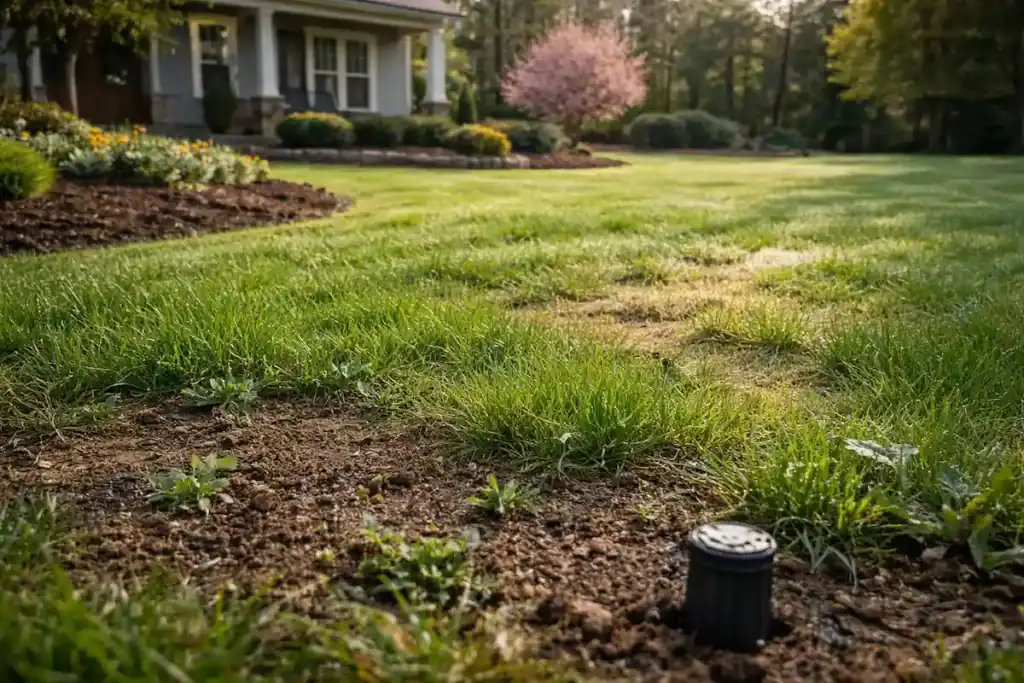
Common Spring Lawn Challenges We See
- Weed seeds beginning to germinate as soil warms
- Thin or patchy turf from winter stress
- Compacted soil limiting root growth
- Early insect activity beneath the surface
- Irrigation systems that were shut down months prior
Weed Control That Starts Before You See Weeds
Weed control in spring is less about reacting and more about staying ahead of what is already happening beneath the surface. By the time weeds show up, they’ve already rooted in and started competing with your turf.
Getting the Application Window Right
Pre-emergent weed control works by creating a protective layer in the soil that stops seeds from developing. The challenge is that this window is narrow. If you apply it too early, the treatment can lose effectiveness before germination begins. When you wait too long, the weeds you were trying to prevent are already growing.
Instead of working off a set calendar date, Turf TitanZ’s lawn care experts look at what’s actually happening on the property and in the surrounding area.
That includes:
- Soil temperature changes from week to week
- Recent rainfall and upcoming weather patterns
- The condition and type of turf already in place

What Proper Weed Control Looks Like as the Season Moves On
When weed control is handled at the right time, the results tend to show up gradually rather than all at once. Lawns fill in more evenly, and there’s less visible competition from weeds as temperatures rise.

Over the next several weeks, most homeowners begin to notice:
- More uniform turf coverage without scattered breakthrough growth
- Less need for spot treatments later in the season
- A lawn that responds more consistently to fertilization and mowing
Spring Fertilization That Supports Healthy Growth
Lawn fertilization in spring should not be about forcing quick, top-heavy grass growth. What matters more during springtime lawn care is helping your turf rebuild after dormancy and setting up a stronger root system before temperatures climb.
At Turf TitanZ, our approach to spring fertilization is based on what your lawn can actually use at this stage. Soil condition, turf type, and recent weather all play a role in how nutrients are applied, so our team looks at your property’s unique needs before coming up with a treatment plan.
Building Root Strength First
Early in the spring season, the focus stays below ground. Instead of pushing for rapid grass blade growth, we apply balanced nutrients that support root development and overall turf structure.
This typically leads to:
- More stable root systems
- Improved turf density
- Grass growth that stays consistent instead of spiking
Problems Caused by Over-Fertilizing in Early Spring
One of the more common issues we run into is lawns that were over-fertilized too early. It can make the grass look greener at first, but the long-term results are not as strong.
Too much fertilizer upfront can lead to:
- Shallow roots that struggle once temperatures rise
- Higher risk of disease as growth becomes too dense
- Faster top growth that requires more mowing without improving turf health
A more measured approach keeps growth in balance and avoids creating extra work or stress for the lawn as the season progresses.
Pest Prevention Before Damage Starts
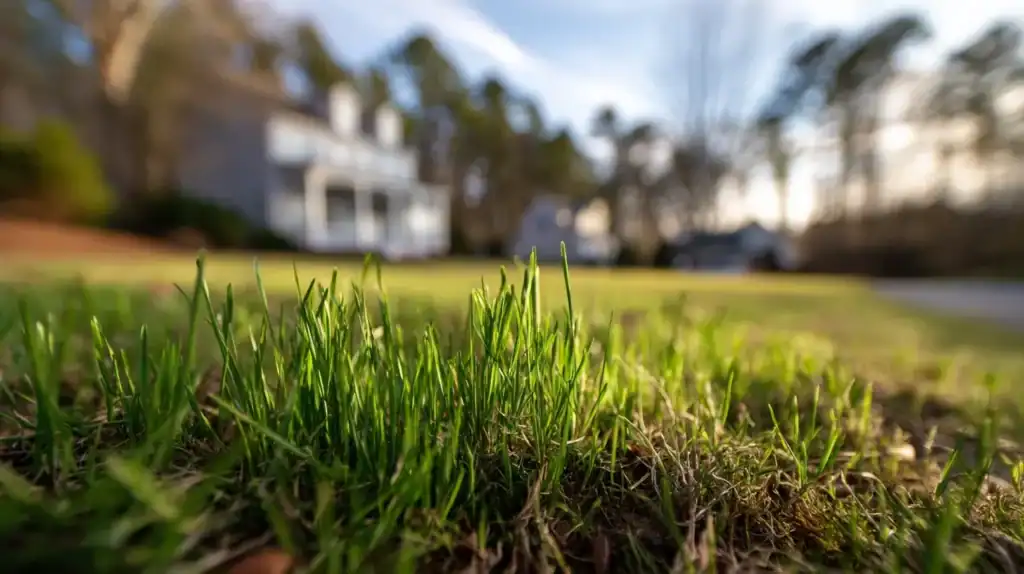
By the time insect damage becomes prevalent on local lawns, the issue has likely been developing beneath the surface of the turf for weeks. Spring is when preventative pest control makes the biggest difference. Addressing insect activity early helps limit the kind of damage that is harder to reverse once the lawn is actively growing.
What We Look for Early in the Season
Not all pest activity is visible right away. A lot of it starts beneath the soil or at the base of the turf, which is why early inspection and treatment matter.
During spring visits, our lawn care team typically watches for:
- Subsurface activity from grubs and similar pests
- Surface-feeding insects beginning to emerge
- Early-stage larvae before they mature and spread
How Preventative Treatment Changes the Outcome
When pest control is handled early in the season, it reduces the chance of more noticeable damage developing later on.
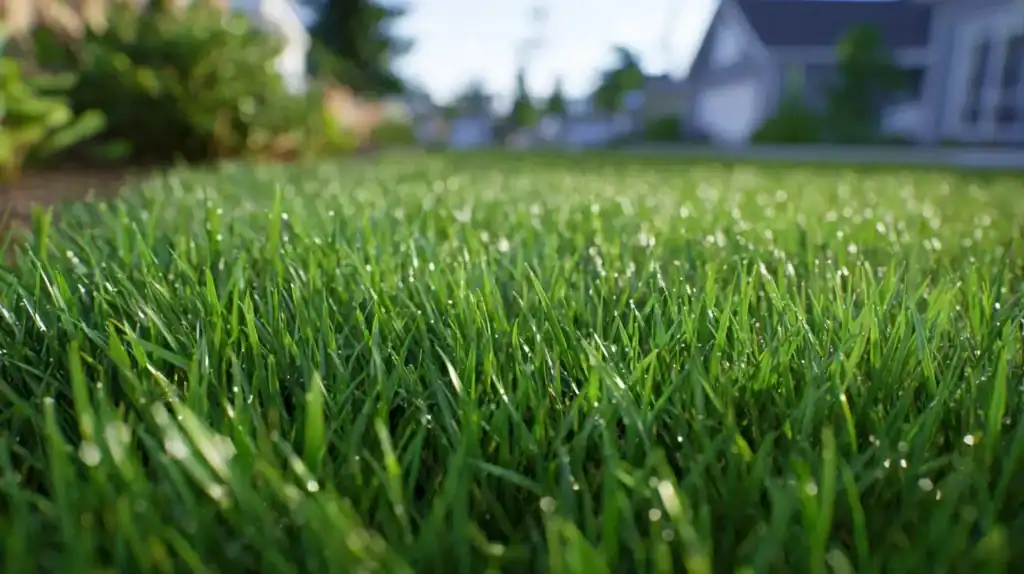
This often translates to:
- Fewer areas of weakened or thinning turf
- Less patching or recovery work heading into summer
- A more consistent lawn without sudden problem spots
One of the patterns we see each year is homeowners discovering pest issues only after visible damage appears. At that point, even with treatment, it can take time for the lawn to recover. Preventative care helps avoid that setback altogether.
Irrigation System Startups and Adjustments
After sitting idle through the winter, irrigation systems rarely start up without a few issues. Even systems that worked well last season can develop leaks, pressure problems, or uneven coverage once they are turned back on.
Spring is the right time to go through the system before consistent watering becomes necessary.
What We Check When Bringing a System Back Online
Each zone of your landscape needs to be reviewed to make sure your yard’s drainage systems are working the way they should.
During a seasonal irrigation startup, we:
- Pressurize and activate the system gradually
- Check for leaks, cracked lines, or damaged sprinkler heads
- Adjust spray patterns to match current lawn and bed layouts
- Review timing and scheduling based on seasonal conditions
This process helps ensure water is reaching the right areas without overwatering or missing sections of the lawn.
How Small Drainage Issues Turn Into Bigger Problems
Irrigation problems are not always obvious at first. A slightly misaligned head or a minor leak can go unnoticed, but over time it starts to affect how the lawn grows.
We often see:
- Dry spots forming where coverage is inconsistent
- Overwatered areas that become soft or prone to disease
- Higher water usage without better results
Adjustments are made based on how the property is laid out and how conditions are changing in real time, rather than relying on the same settings used in previous seasons.
Lawn Aeration and Soil Preparation
What happens below the surface of your grass has a direct impact on how your lawn performs above it. If the soil is compacted, even the right fertilizer and watering schedule will not deliver the results you expect.
Spring lawn aeration is one of the most effective ways to open up the soil and give roots access to what they need to grow.
When Soil Compaction Starts to Affect Your Lawn
Soil compaction does not always stand out right away, but there are a few patterns that tend to show up over time.
You might notice:
- Water sitting on the surface instead of soaking in
- Areas that feel hard underfoot
- Grass that struggles to fill in or grows unevenly
- Sections of the lawn that get heavier use and wear down faster
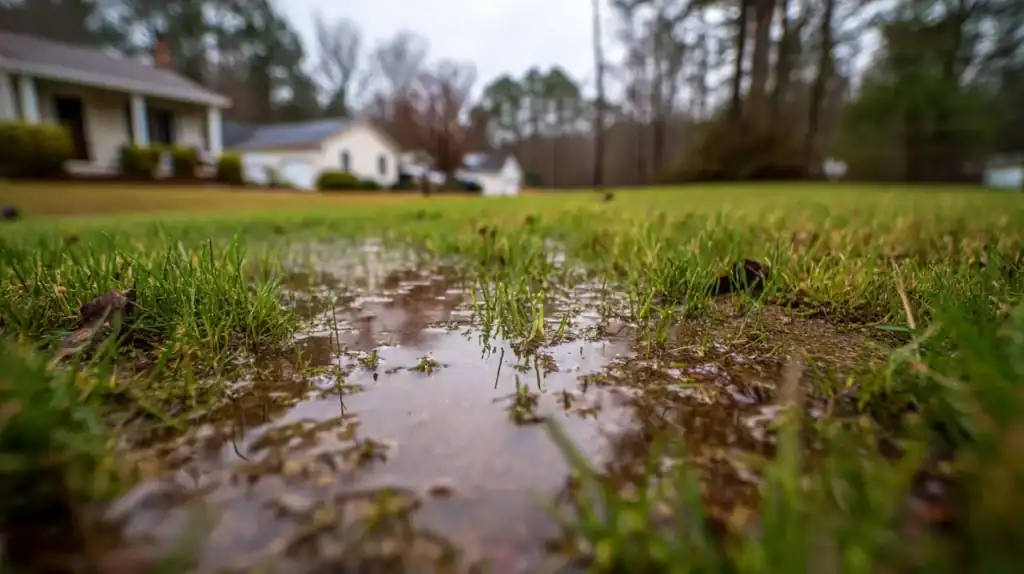
In many lawns in Wake Forest and throughout Wake County, clay-heavy soil makes this more common, especially after a wet winter or regular foot traffic.
What Changes After Aeration Services
Aeration creates small openings in the soil, allowing air, water, and nutrients to move more freely through the root zone. That shift below the surface tends to show up gradually in how the lawn grows.
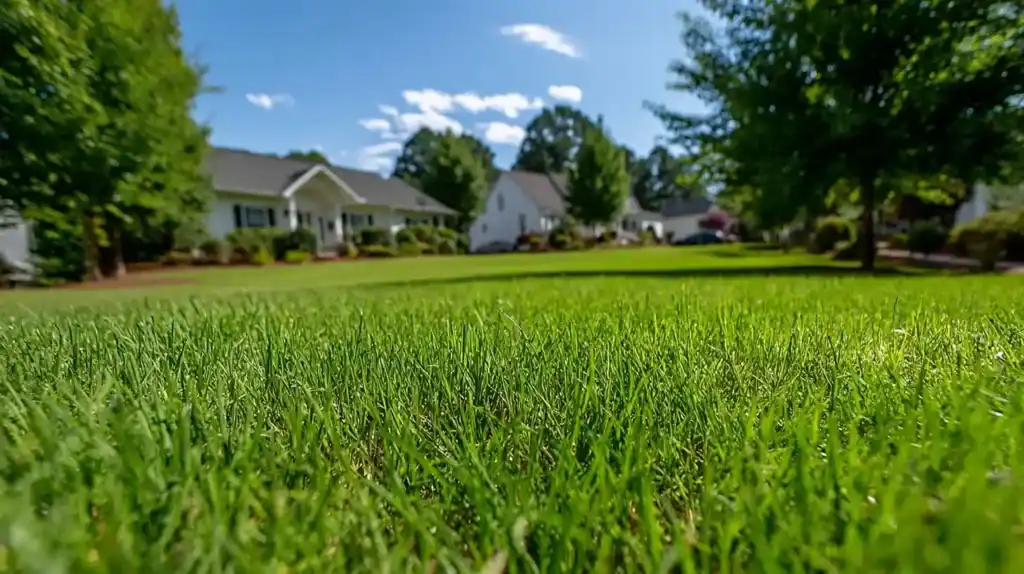
After aeration, lawns often:
- Develop stronger, deeper root systems
- Make better use of fertilization and watering
- Hold up better during heat and dry periods
It is not an overnight change, but it improves how the lawn responds to everything that follows throughout the season.
Seasonal Lawn Maintenance and Cleanup
Spring cleanup isn’t just about clearing away the debris left behind after winter. It is about getting the lawn into a condition where new growth can come in evenly and treatments can actually reach the soil.
Without that prep work, even well-timed spring lawn care applications can end up sitting on top of debris or uneven surfaces, limiting how effective they are.
What Gets Addressed During a Proper Spring Cleanup
A thorough cleanup focuses on more than appearance. It creates the right starting point for everything that follows.
That typically includes:
- Clearing out leftover leaves, thatch buildup, and winter debris
- Trimming and edging to define lawn and bed lines
- Resetting landscaped areas so they are ready for the season
- Noting areas that may need repair, overseeding, or additional attention
This step also gives us a chance to spot early issues that are easy to miss once the lawn starts growing in.
How a Clean Start Affects the Rest of the Season
Once your lawn is cleared and leveled out, it responds differently to everything that comes next. Water, nutrients, and treatments are able to reach the soil more directly, rather than getting blocked at the surface.
Over the next several weeks, that usually translates to:
- More even growth across the lawn
- Better response to fertilization and weed control
- A cleaner, more finished appearance earlier in the season
It is a simple step, but it plays a role in how consistent the lawn looks and performs moving forward.
Schedule Your 2026 Spring Lawn Care Services
If you are planning your lawn care for the season, spring is the time to start. Early preparation creates a stronger, more manageable lawn moving into summer.
Turf TitanZ provides spring lawn care services throughout Wake Forest and surrounding communities, including weed control, fertilization, pest prevention, irrigation startups, and seasonal maintenance.
To get started, call us today at 919-562-0771 or fill out our contact form below.
Request a Quote Form
We would love to hear from you! Please fill out this form and we will get back to you shortly.